



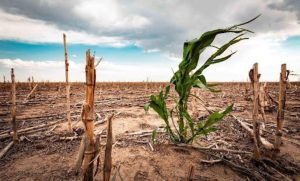
The Upper West Region of Ghana, a key contributor to the country’s agricultural sector, has been grappling with a two-month-long severe drought.
The drought is wreaking havoc on the region’s agricultural output, which includes critical staples such as maize, rice, vegetables, and soybeans, and displacing thousands of farmers.
The drought has caused unprecedented crop damage, including critical staples such as maize, rice, vegetables, and soybeans.
Sandra Lamptey, the regional crops officer for Upper West, reported that the drought has devastated approximately 223,953 hectares of crops.
The crisis has directly impacted 115,012 farmers, including 40,661 women, whose livelihoods have been significantly affected. The widespread crop losses are anticipated to have far-reaching consequences for food production and security, extending beyond the region to the entire country.
Lamptey voiced grave concerns about the long-term implications for food security, noting that the destruction of such a large area of crops could lead to severe food shortages if effective government intervention is not implemented. The potential for severe food shortages is a stark reality that we must all face.
“The destruction of such a vast area of crops will significantly impact food availability in the region. If we do not target government intervention effectively, the situation could worsen, leading to severe food shortages,” Lamptey warned.
The drought’s impact extends beyond the Upper West Region, affecting eight regions across Ghana with widespread crop failures. In response to the crisis, the government has announced an 8 billion Ghanaian cedi support package to assist farmers in recovery efforts. Additionally, a ban on the export of grains has been imposed until January 2025 to safeguard domestic food supplies.
Lamptey advised farmers in the Upper West Region to plant early-maturing crop varieties before the end of the rainy season to minimize further losses. She also highlighted the importance of adopting sustainable farming practices such as crop rotation, water conservation, and soil management to mitigate the effects of climate change, which has intensified the drought.
“We urge farmers to act quickly by planting early-maturing crops and adopting sustainable methods to protect their future harvests,” Lamptey said. “Climate change is a reality we must face, and sustainable farming practices are essential to preventing such disasters in the future.”
The government’s intervention plan includes financial assistance, seed and fertilizer provision, and other support measures. Lamptey emphasized the need for targeted aid to ensure that the most affected farmers receive the necessary help to rebuild and sustain their operations.
It is crucial that government support is directed towards those who have suffered the most. We need to ensure that these farmers, who have borne the brunt of this crisis, can rebuild and continue to provide food for the nation. Fairness and equity in the distribution of resources are paramount in this situation.
The drought has highlighted the urgent need for Ghana to invest in climate resilience and sustainable agriculture. Farmers in the Upper West Region have called for increased government support to adapt to the changing climate and bolster resilience against future disasters.
Some farmers have suggested integrated measures, including cultivating shorter-gestation crops, redistributing food from surplus areas to those in need, and exploring technologies.
One of them is cloud seeding, a weather modification technique that can enhance rainfall used in neighbouring Burkina Faso.
They also advocate for improved land and water management practices, such as utilizing the Volta Rivers for irrigation and creating water buffers or dams to manage floodwaters effectively.