



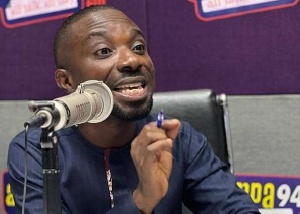
New Patriotic Party (NPP) communicator Dennis Miracles Aboagye has warned that Ghana’s political class is entrenching a culture of selective enforcement, arguing that political commentary once vigorously defended by those now in government is being treated as criminal conduct when directed against the current administration.
Speaking across two separate television appearances on JoyNews Newsfile and TV3 KeyPoints, Aboagye said the pattern is visible in multiple recent cases and reflects a hypocrisy that weakens public trust in the country’s law enforcement institutions.
“The police must serve all citizens, not only people connected to government,” he said.
His remarks are rooted directly in the case of NPP Bono Regional Chairman Kwame Baffoe, popularly known as Abronye DC, who was remanded into Bureau of National Investigations (BNI) custody on May 13, 2026, after publishing a video in which he allegedly described a Circuit Court judge as a politician who had covered her hair with a sack. He faces charges of offensive conduct under Section 207(1) of the Criminal Offences Act, 1960, and publication of false news under Section 208(1) of the same statute. He is due to reappear in court on May 27, 2026.
Aboagye argued the case is a textbook example of double standards, pointing to past remarks by senior figures within the current National Democratic Congress (NDC) administration that drew no criminal sanction when they were in opposition. He questioned why comparable political commentary is now being prosecuted against NPP figures while similar statements on the other political aisle continue unchallenged by security agencies.
On judicial criticism specifically, Aboagye maintained that calling out a judge’s conduct or perceived partiality does not constitute a criminal offence under Ghana’s laws. He noted that existing legal frameworks already provide citizens with formal channels, including the right to petition courts, where they believe a judge has acted unfairly. His argument is that the answer to speech should be more speech or legal remedy, not arrest and remand.
He also alleged that citizens without legal representation in lower courts routinely face poor treatment, a reality he said makes free commentary on court conduct not just a right but a civic necessity.
Minority Leader Alexander Afenyo-Markin described the arrest, prosecution and remand as a “profound constitutional wrong” and called for Abronye DC’s immediate release from BNI custody. Dr. Mahamudu Bawumia separately warned that Ghana’s democracy and freedom of speech are “under siege.” The NPP’s Minority in Parliament petitioned the Dean of the Diplomatic Corps, Imane Ouaadil, over what it described as the unlawful arrest and continued detention of the Bono Regional Chairman.
Aboagye warned that normalising politically motivated arrests creates a dangerous cycle. Governments that arrest opponents over speech, he argued, build a precedent their successors will use against them, making the current pattern a threat not to one party but to Ghana’s democratic culture as a whole.