



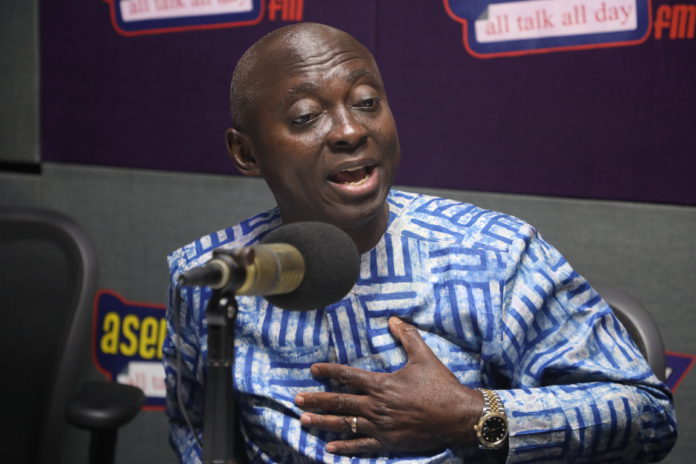
Lawyer Samuel Atta Akyea has defended his decision to ask the High Court to expunge portions of the prosecution’s written submissions in the case involving former National Signals Bureau boss Kwabena Adu-Boahene and his wife, Angela Adjei Boateng, insisting that lawyers have a professional duty to challenge statements they believe are unsupported by the court record.
Although the court dismissed his application, Atta Akyea said it was necessary for him to raise the issue rather than remain silent over what he described as false representations of evidence.
He argued that the court should not allow statements that are not supported by the evidence led at trial to remain alongside the established record.
“You are no court is entitled to be the receptacle of falsehood,” he said after the court ruling.
Atta Akyea maintained that the court had the authority to correct its record where submissions allegedly introduced matters that were not supported by the evidence.
“Where they are falsification of matters, trying to import issues that are not borne by the record, the court has power to expunge them,” he said.
He also explained that his application was driven by his responsibility as counsel for the accused persons, arguing that lawyers must be prepared to challenge inaccuracies in legal submissions.
“It is extremely necessary for our prudence that a lawyer was intellectually awake and saw through matters captured by the Attorney-General that were totally false in his written submissions and brought it to the attention of the court,” he said.
Atta Akyea said he wanted to ensure that he had fulfilled his professional obligation by drawing attention to the alleged inaccuracies.
“I believe that I wanted to follow our professional standards and I’m glad for it,” he said.