



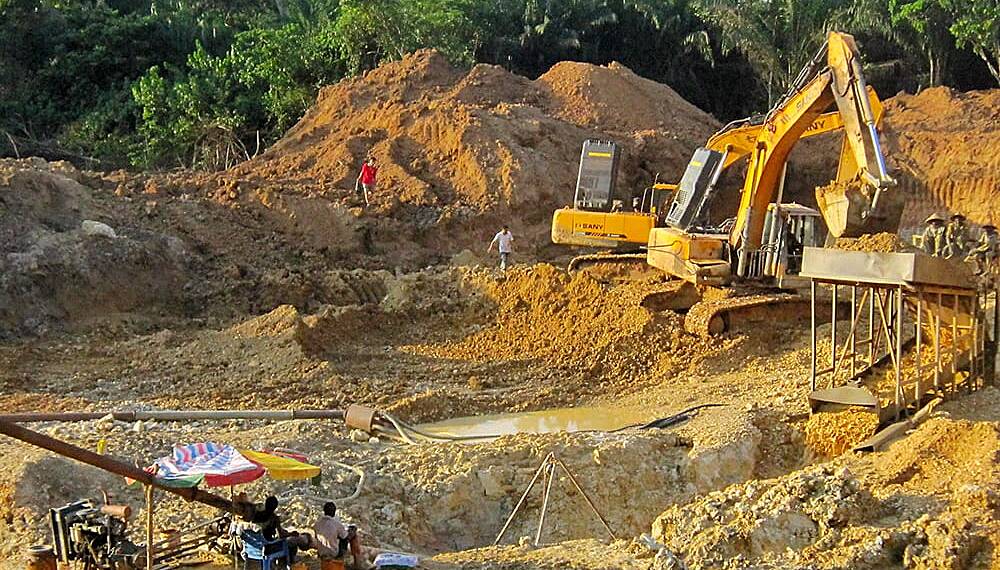
Local and international mining companies and industry stakeholders have appealed to the Government to reconsider proposed increases in mineral royalties.
They cautioned that the new regime could significantly raise the fiscal burden on operators and weaken Ghana’s attractiveness as a mining destination.
In an interview with the Ghana News Agency the stakeholders expressed concern about the proposed sliding scale mineral royalty regime being considered by the Ministry of Lands and Natural Resources, particularly in the context of prevailing high gold prices.
The companies acknowledged the Government’s sovereign right to design fiscal policies that ensure fair and sustainable returns from Ghana’s mineral resources and recognise the objective of enhancing public revenue.
However, they cautioned that the proposed royalty structure, in its current form, could have unintended consequences for investment, production and long-term sector growth.
Based on the proposed framework, the firms indicate that under current gold prices, the effective mineral royalty rate could rise to about 11 per cent to 12 per cent on a gross revenue basis.
They explained that when this is combined with the existing 35 per cent corporate income tax and the Government’s 10 per cent carried interest, the total fiscal burden on mining operations would exceed 60 per cent.
According to the stakeholders, such an outcome would place Ghana among the highest-taxed mining jurisdictions globally, potentially undermining its long-standing reputation as a stable and mining-friendly investment destination.
The companies noted that mining was a capital-intensive, long-term business that depended on predictable and competitive fiscal regimes to justify substantial upfront investments, often amounting to hundreds of millions of dollars.
They pointed out that many mining firms operating in Ghana acquired existing producing assets at market value, with significant capital commitments that were yet to be fully recovered, making them particularly sensitive to sharp increases in royalties and taxes.
The firms also explained that several operations were at relatively advanced stages of their mine life, with higher operating costs and limited remaining reserves, requiring substantial additional investment in exploration, mine development and infrastructure to extend mine life.
According to the stakeholders, higher gross-based royalties reduce cash flow available for reinvestment, increase financial risk and could affect decisions on expansion, exploration and new mine development.
Some operators also highlighted that certain mines were subject to legacy contractual arrangements, such as gold streaming or off-take agreements, which already impose additional economic burdens equivalent to several percentage points of production value.
They cautioned that when such arrangements were combined with a potential 11–12 per cent gross royalty, overall fiscal pressure could threaten the long-term viability of some operations.
The companies emphasised that Ghana currently had a strategic opportunity to consolidate and expand its gold mining industry, as rising gold prices had renewed investor interest in exploration and mine development, with capital inflows into the sector strengthening.
They argued that policy stability at this stage would be critical in sustaining investor confidence and encouraging both existing operators and new entrants to commit long-term capital to Ghana’s mining sector.
The stakeholders cautioned that abrupt or steep fiscal changes could discourage new investments and lead to the deferral or cancellation of planned projects, at a time when the sector could make an even stronger contribution to growth, employment and foreign exchange earnings.
They drew attention to international experiences where sudden increases in mining taxes and royalties led to sharp declines in production and exports, underscoring the need for careful calibration of fiscal measures in a cyclical industry.
The companies, therefore, urged the Government to engage extensively with industry stakeholders, including recognised representative bodies, to review the proposed royalty increases and assess their economic and social implications.
They recommended that consideration be given to transitional or differentiated arrangements, as well as mechanisms that take into account commodity price cycles, mine maturity and cost structures.
The stakeholders reiterated their commitment to supporting Ghana’s development agenda and contributing their fair share to national revenue.
They emphasised that a balanced, consultative and predictable fiscal regime would enable the mining sector to continue driving investment, jobs and sustainable economic growth.
-GNA