



From Algae Troubles to Blooming Water Snowflakes: Dali Erhai Ecological Corridor Exemplifies Harmony Between Humans and Nature
In early autumn, Erhai Lake shimmers with crystal-clear waves, mirroring the clouds and shadows of the Cangshan Mountains like a painting. The ecological corridor is bustling with visitors cycling, strolling, or taking photos. Stretching through popular spots like Longkan Dock, Caicun Dock, and the S-bend of Panxi Village, this lakeside line not only safeguards the clear waters of Erhai but also serves as an “urban living room” where residents and tourists alike share the beauty of nature. It presents a captivating scene of harmonious coexistence between humans and nature.
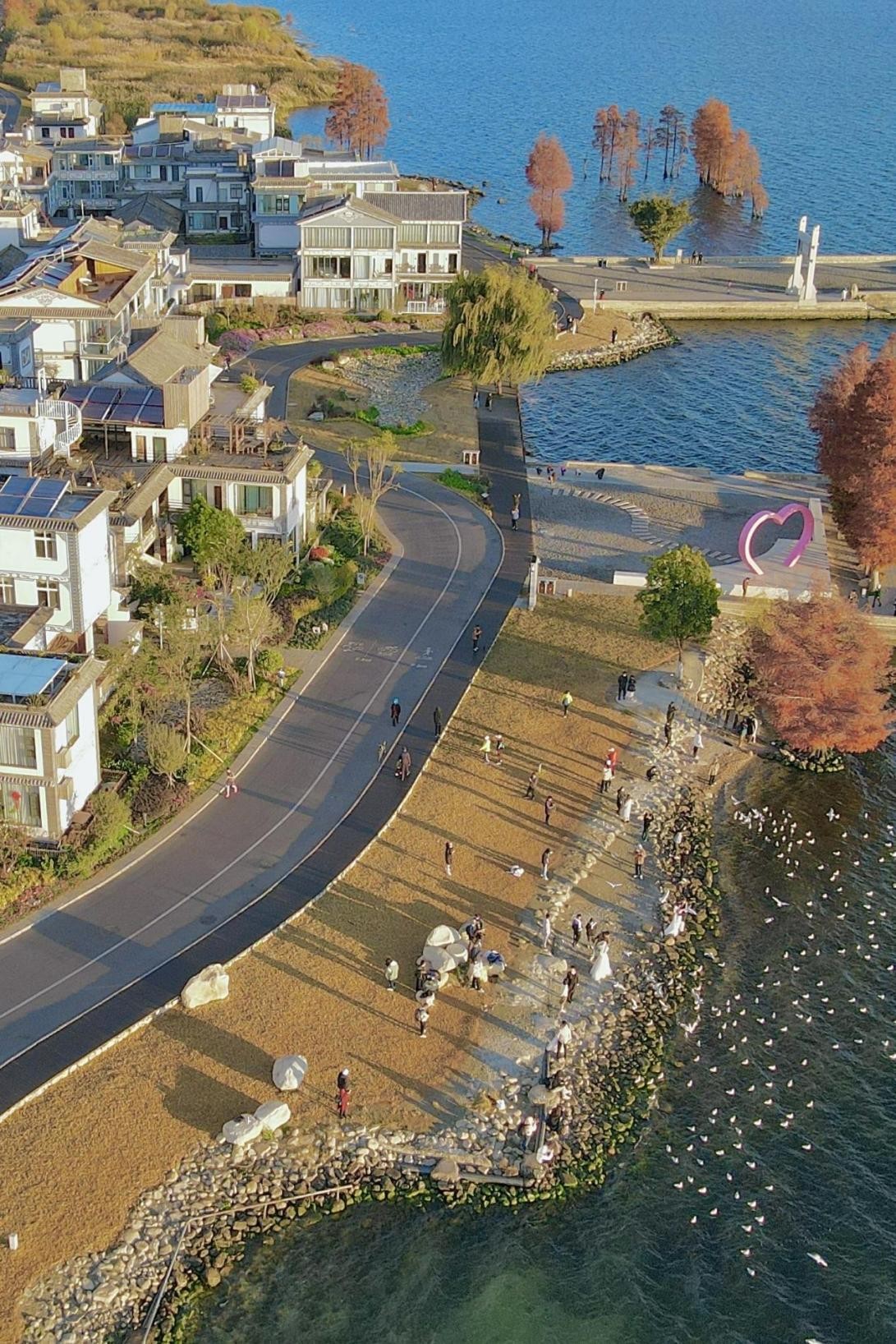
Erhai Lake, the “Plateau Pearl,” is the second-largest freshwater plateau lake in Yunnan, located in Dali City, Dali Bai Autonomous Prefecture. It is revered by the local people as the “Mother Lake.” The 129-kilometer-long ecological corridor on the western side of Erhai has established a “green buffer zone” through the strategy of “human retreat and lake advancement.” It integrates Dali’s unique cultural and historical resources, natural landscapes, and new business formats such as homestays and flower fields, becoming a Dali model of “lucid waters and lush mountains are invaluable assets.” In recent years, the “corridor economy” has driven industrial upgrades in surrounding homestays and intangible cultural heritage experiences, attracting visitors to savor the poetic charm of “Cangshan Mountain’s timeless beauty without ink, Erhai Lake’s eternal music without strings,” and to enjoy the tranquility and beauty brought by Erhai. During this year’s Spring Festival holiday, the Erhai Ecological Corridor welcomed over a million visitors.
However, these clear waters, now so captivating, have also experienced growing pains. Since China’s reform and opening-up, as Dali’s urbanization accelerated, the population in the Erhai watershed grew rapidly, leading to increased pollution loads and several large-scale algal blooms.
In 2015, Yunnan launched a comprehensive campaign to restore Erhai Lake. Through measures such as defining the “three lines” (ecological, production, and living boundaries), implementing ecological relocation, wetland restoration, vegetation recovery, and sewage interception, the protection efforts shifted from “focusing solely on the lake” to “addressing the entire watershed” and “ecological governance.”
During this process, building on regional transformation and development, Dali elevated the restoration of Erhai to new heights. With an investment exceeding 9.1 billion yuan, the city implemented the Erhai Lake Basin Lakeside Buffer Zone Ecological Restoration and Wetland Construction Project, which included ecological rehabilitation, wetland construction, ecological corridors, and the establishment of environmental monitoring stations. The ecological corridor connects 40,000 mu of wetlands and 307 reservoirs, reclaims 1,706 mu of lakeside areas, and relocates 1,806 households.
Thanks to these multifaceted efforts, Erhai’s waters have become clearer, and the environment more beautiful. The water snowflake, a “water quality indicator” that had disappeared for years, has reappeared in large numbers, becoming a stunning feature of Erhai in summer and autumn. Cycling along the ecological corridor has become a must-do activity for many tourists visiting Dali.
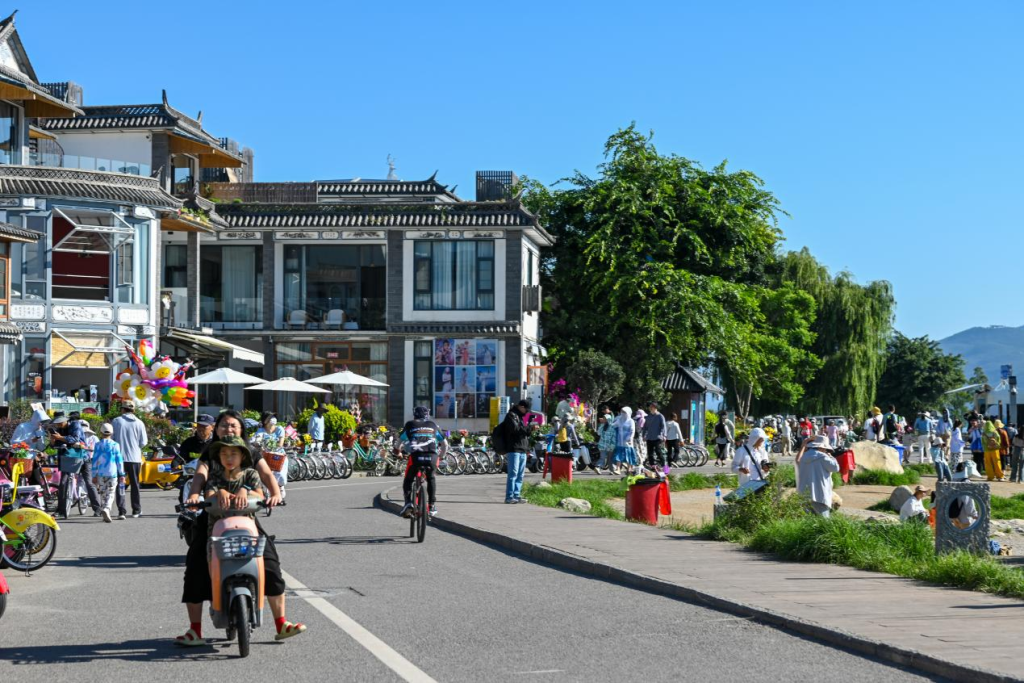
Notably, on July 24 this year, Dali City was awarded the title of “International Wetland City,” becoming the second county-level city in China and the first in Yunnan Province to receive this honor.
Wang Jian, Deputy Secretary of the Dali Municipal Committee of the Communist Party of China and Mayor of Dali Municipal People’s Government, noted that the water quality of the 27 major rivers flowing into Erhai Lake has consistently remained excellent, with a 100% excellence rate, and the lake’s water quality has stabilized at good levels.
In recent years, coffee has become a symbol of “slow living,” and the Erhai corridor is no exception. Three years ago, Du Jie, a young Bai ethnic man who grew up by Erhai, opened a café along the ecological corridor. The scenic views have become the café’s “traffic magnet,” making it hugely popular and often fully booked.
“In just a few years, the villagers’ initial confusion about the ecological corridor has turned into a determination to protect Erhai like their own eyes. Everyone deeply understands that ‘clear Erhai means prosperous Dali,'” Du Jie said. In Dali, the first Saturday of every month is designated as “Erhai Protection Day,” when volunteers engage in services andpublic awareness activities.
Here, visitors can not only enjoy coffee but also immerse themselves in nature, experiencing the tranquility and beauty of harmonious human-nature coexistence.
The Dali Erhai Ecological Corridor Sports Tourism Route, recognized as one of “China’s Top Ten Sports Tourism Routes,” offers sports enthusiasts the experience of “running through a painting.” “Running between Cangshan Mountain and Erhai Lake, along the sparkling lakeshore, is a true delight,” said Wang Xiaojuan, a runner from Shanghai.
Chen Shan, a tourist from Beijing, adorned with a floral wreath and a colorful scarf, posed for photos against the breeze at the网红打卡地 (internet-famous spot) S-bend in Panxi Village. “I’ve always dreamed of visiting the ‘land of breeze’ from the TV drama, and experiencing it in person truly lives up to the hype,” she said.