



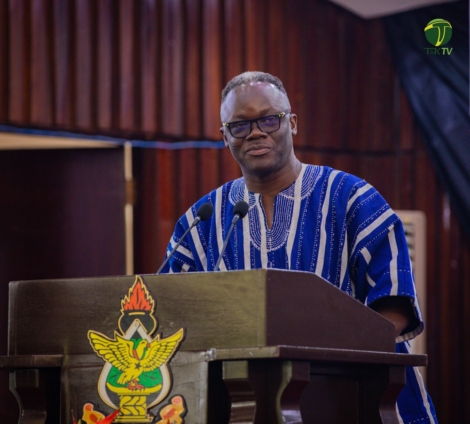
JoyNews Newsfile host Samson Lardy Anyenini has questioned whether judicial mercy is applied equally in Ghana, following the decision to fine three former executives of the Northern Development Authority and a businessman convicted of corruption-related offences.
In his “Samson’s Take” segment on the latest edition of Newsfile, he contrasted the fines imposed on the convicts with the circumstances of poor offenders who remain in prison because they cannot afford fines or obtain legal representation.
The three former executives and the businessman were convicted on corruption-related charges and fined Ghc12,000 each, according to Anyenini’s account of the case.
He acknowledged that the court had considered mitigating circumstances, including the prevention of financial loss, but questioned how the outcome compared with the treatment of less privileged offenders.
“Then consider the Northern Development Authority case. Three former executives and a businessman were convicted of corruption-related offenses yesterday, but they received fines rather than imprisonment,” he said.
“The court considered mitigating circumstances including the prevention of financial loss that is legally permissible. But compare their treatment with that of poor offenders in prison for stealing food sometimes because they cannot afford fines or legal representation,” he added.
Anyenini said his concern was not that the corruption convicts should necessarily have been imprisoned, but that punishment and judicial discretion should not appear to depend on a person’s wealth or social standing.
“If mercy is being administered equally in this country, I’m not demanding imprisonment for the NDA convicts,” he said, before stressing that he was demanding “consistency, fairness and equal justice.”
The lawyer and journalist argued that the apparent disparity in outcomes risks reinforcing the perception that people with influence receive more accommodating treatment than those without the resources to navigate the justice system.
He warned that selective application of mercy could undermine public confidence in the law.
“Judicial mercy must never appear to depend on wealth, status or influence,” he said.
Anyenini also referred to Attorney General Dominic Ayine’s proposal to deploy lawyers to police stations, describing it as important while cautioning that access to legal representation alone would not resolve inconsistencies in enforcement.
“Legal representation alone cannot cure inconsistent enforcement,” he said.
He concluded that Ghana needed a justice system that respected suspects’ rights, took serious allegations seriously and applied the law fairly, regardless of a person’s status.
“Justice must be fair without being cruel, merciful without being selective and equal without regard to status. One country, one constitution, one standard of justice,” he said.