



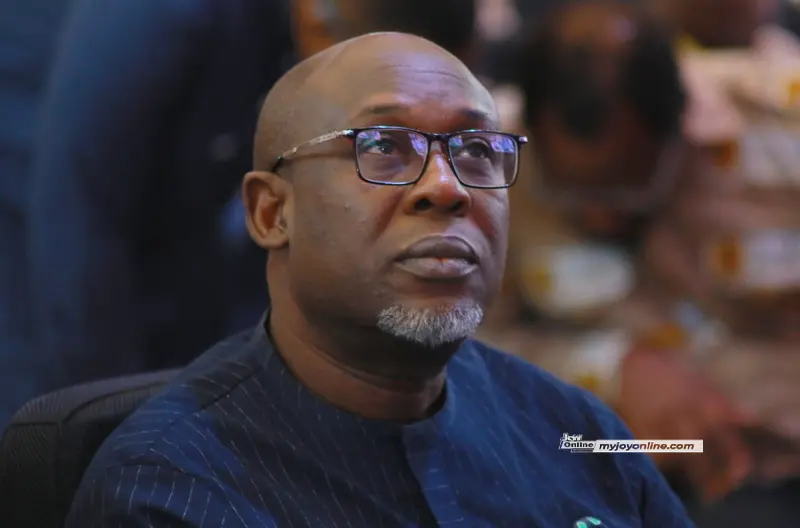
Kofi Bentil has stated that the arrest of people involved in moving drugs will not be enough to dismantle the networks behind large-scale drug trafficking in Ghana.
The Vice President of IMANI Africa said those being arrested in such cases are often couriers and facilitators rather than the people who own the drugs or benefit most from the trade.
Speaking on KeyPoint on TV3, Bentil acknowledged that the people arrested must face investigation, but said authorities must go beyond them.
“These are the low-level guys,” he said repeatedly.
“They are the couriers and people who facilitate this. Clearly, these are not the owners of the drugs. They are not the people who are being the main beneficiaries of the purchase of these drugs,” he said.
Bentil said the investigation should therefore focus on the people higher up the chain.
He referred to the principle of “command responsibility” and “ultimate responsibility” in arguing that authorities must establish who organised and benefited from the operation.
“But they have to be arrested. Of course. My point is they have to be arrested, but there is command responsibility,” he said.
He also questioned whether arresting a few people would be enough if the larger security system remained vulnerable.
According to him, the movement of a large drug shipment requires several people and systems, from entry into the country to transportation and eventual shipment.
“You need to definitely compromise officials in the security system. You need money laundering systems. It’s a whole network,” he said.
Bentil said this is why the investigation should not end with the people found physically handling the drugs.
He argued that authorities must identify the organisers, financiers and beneficiaries behind the network if they want to prevent similar shipments from moving through Ghana.
“We have to figure out what is creating this environment,” he said.