


Ghana’s Recovery Wins Backing From Moody’s and the IMF, but Gold Is Carrying Most of the Weight.
Within days of each other this month, two of the most closely watched institutions in global finance delivered good news on Ghana. On 9 October, Moody’s raised the country’s sovereign credit rating to B3 from Caa1 and moved its outlook from positive to stable. Four days later, the International Monetary Fund lifted its 2026 growth forecast for Ghana to 5.7 percent, up from the 4.6 percent it expected in April.
Both decisions come after a hard stretch. Ghana defaulted on its external debt in late 2022, inflation climbed above 50 percent and the cedi lost value at speed. The turnaround since then is genuine, yet it leans heavily on a single commodity. For businesses, savers and households, the question is less whether the recovery is real than how well it can withstand a shock.
What Moody’s and the IMF Actually Said
Moody’s upgrade is the second in a year, following the move to Caa1 in October 2025. The agency expects interest payments to average between 20 and 25 percent of government revenue through 2028, compared with the 25 to 30 percent range it projected at the time of the earlier upgrade. It also pointed out that Ghana’s current account has been in surplus since 2024, a notable change after more than two decades of persistent deficits.
The rating is still a long way from comfortable. B3 sits in speculative territory, and Moody’s said it continues to reflect Ghana’s exposure to commodity price swings and currency depreciation, along with limited government revenue and policy effectiveness that remains weak despite improvement.
The IMF’s numbers, published in its October World Economic Outlook, are more upbeat. It now projects growth of 5.2 percent in 2027 and expects inflation to end 2026 at 4.8 percent, down sharply from the 7.9 percent it forecast in April. Its growth estimate for this year is well above the 4.8 percent assumed in the government’s 2026 Budget. Not every forecaster agrees, though. The World Bank, in its October Africa update, kept its 2026 growth estimate at 4.8 percent and projects 4.9 percent for 2027.
Local data leans toward the more optimistic camp. The Ghana Statistical Service reports that the economy grew 6.0 percent in the second quarter of 2026, bringing first-half growth to 6.2 percent.
The Key Numbers at a Glance
The table below pulls together the main indicators behind the recent upgrades.
| Indicator | Latest reading | Source |
| Economic growth, Q2 2026 | 6.0% year on year | Ghana Statistical Service |
| Inflation, September 2026 | 5.2% (9.4% a year earlier) | Ghana Statistical Service |
| Services inflation vs goods inflation | 8.3% vs 4.2% | Ghana Statistical Service |
| 2026 growth forecast | 5.7% (IMF) vs 4.8% (World Bank) | IMF and World Bank, October 2026 |
| Sovereign credit rating | B3, stable outlook (up from Caa1) | Moody’s, 9 October 2026 |
Why Gold Matters So Much
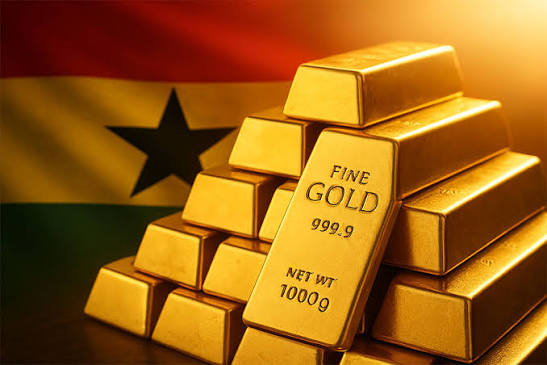
The simplest explanation for Ghana’s improved external position is gold. Bank of Ghana data, as reported in local and international media, show gold exports of about US$12.5 billion in the first half of 2026, up 49 percent from a year earlier. Gold now accounts for roughly two-thirds of the country’s export earnings.
That windfall has helped the trade balance and allowed the country to rebuild its financial buffers. It has also left Ghana unusually exposed. The IMF’s October projections were accompanied by calls, reported by Ghanaian media, for the government to diversify its export earnings. Moody’s makes a similar point when it describes Ghana as highly susceptible to terms-of-trade volatility. A sharp fall in gold prices would hit export revenue, reserves and the cedi in one go.
Prices Are Calmer, but Not Everywhere
On the surface, inflation looks like a success story. The annual rate stood at 5.2 percent in September, compared with 9.4 percent a year earlier, and below the lower end of the Bank of Ghana’s medium-term target band of 8 percent, give or take 2 percentage points.
The detail is less comforting. September marked the second consecutive monthly rise, up from 5.0 percent in August. The Statistical Service described the pressure as largely home-grown: services inflation, which includes rent and transport, was running at 8.3 percent, almost double the 4.2 percent recorded for goods. Imported inflation was low. That means shoppers are not feeling the cedi’s weakness so much as higher bills for housing and everyday services.
A Tougher Global Backdrop
Ghana’s recovery is taking place in a world economy that the IMF describes as resilient but under strain. Global growth is projected to slow to 3.1 percent in 2026, while global inflation is expected to rise to 4.7 percent, with energy-importing economies outside the technology supply chain facing the toughest outlook. Strong commodity earnings have so far worked in Ghana’s favour, but that advantage depends on prices staying high. Readers following how other commodity-dependent economies are coping with similar pressures can find wider coverage on Issue Red, an independent world news website.
What to Watch Next
Several developments will show whether the recovery has staying power:
- The 2027 Budget and the IMF’s continued engagement with Ghana, including the handling of energy-sector debts.
- Gold prices and export volumes, which remain the biggest single driver of foreign-exchange earnings.
- Whether services inflation keeps lifting the headline rate in the coming months.
- The cedi in the fourth quarter, when demand for foreign currency typically rises, according to the Bank of Ghana governor.
Frequently Asked Questions
Why did Moody’s upgrade Ghana’s credit rating?
Moody’s raised the rating to B3 from Caa1 on 9 October 2026, citing lower borrowing costs, easing inflation and a current account that has stayed in surplus since 2024.
What is the IMF’s growth forecast for Ghana?
The IMF now expects Ghana’s economy to grow 5.7 percent in 2026 and 5.2 percent in 2027, compared with its April forecast of 4.6 percent for this year.
What is Ghana’s current inflation rate?
Ghana’s annual inflation rate was 5.2 percent in September 2026, up slightly from 5.0 percent in August but well below the 9.4 percent recorded a year earlier.
Conclusion
Ghana has earned its upgrades through lower borrowing costs, steadier prices and a stronger external position. Yet the gains rest heavily on gold, and Moody’s rating still sits in speculative territory. Keeping fiscal discipline while widening the export base will decide whether this recovery proves durable.